Increase the Revenues of Your Waste Company With the Tips Shared in Our Blog Articles
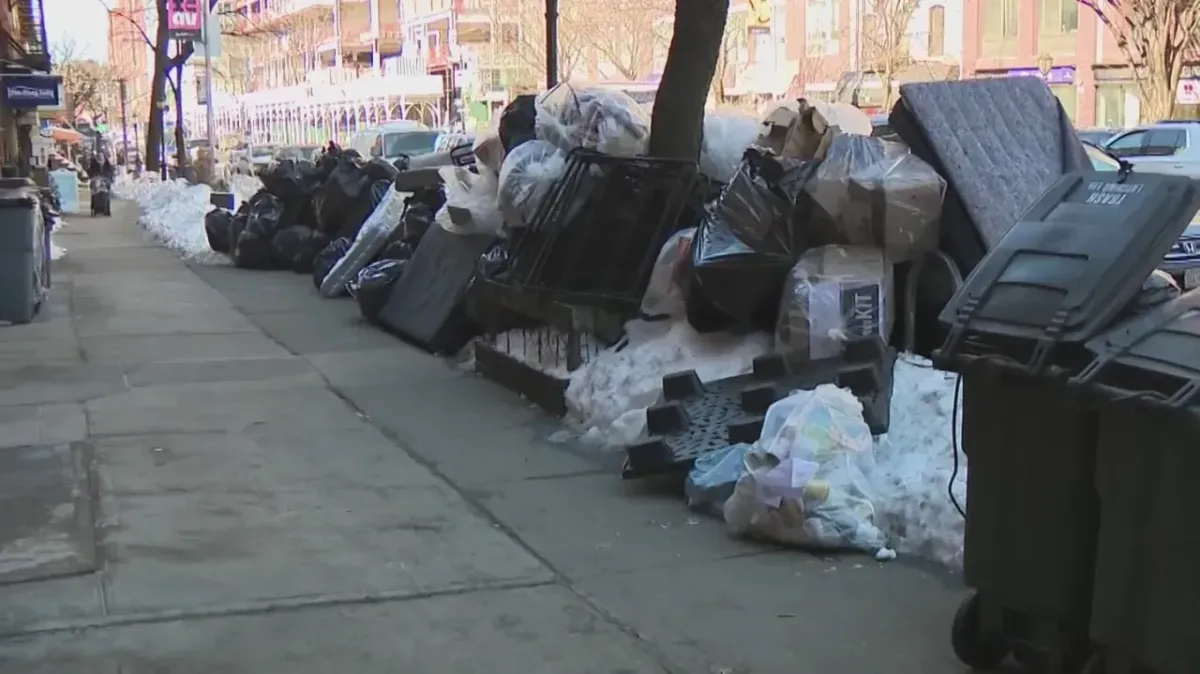
This Is Why New York’s Garbage Is Piling Up (And It’s Not the Snow)
What the 2026 Waste Crisis Reveals About a Broken Model — And How to Fix It Before the Next Storm Hits
These days social-media, newscasts, and online articles are exploding about the problem that New Yorkers are facing due to the combination of snowstorms and waste.
I decided to share my suggestion because of my position of waste management expert.
For that, let’s get something straight.
New York City is not drowning in trash because of a snowstorm.
It’s drowning because the system is fragile.
In February 2026, after a major winter storm dumped more than a foot of snow, the New York City Department of Sanitation (DSNY) shifted into snow-removal mode.
Plows rolled.
Salt was spread.
Overtime exploded.
And meanwhile?
Garbage bags stacked up on sidewalks across the five boroughs.
Residents complained.
Rodents celebrated.
Compost enforcement resumed.
Summonses were issued.
Officials said there was a 24-hour delay.
Residents said it felt like a week.
But here’s the uncomfortable truth:
Snow didn’t cause this.
Snow exposed it.
The Real Problem Isn’t Weather. It’s Structure.
When a single operational shift — snow removal — causes garbage to paralyze an entire city…
That’s not a weather issue.
That’s a design issue.
New York operates on a model that was built for the 19th century:
Collect → Transport → Dispose.
Even recycling is mostly an extension of disposal logic.
The system is optimized for movement.
Not for value control.
So when movement slows?
Everything stalls.
If your system collapses every time trucks can’t roll perfectly…
You don’t have resilience.
You have a dependency.
I call this truck-dependency syndrome.
And I see it everywhere — from private haulers to major municipalities.
It’s one of the core problems I dismantle inside my book, The Waste Alchemy.
What Everyone Is Missing
When garbage piles up on sidewalks, here’s what the system sees:
Backlog
Cost
Labor pressure
Political risk
Here’s what it doesn’t see:
Inventory
Commodity
Strategic resource
Revenue potential
And that blind spot is costing cities millions.
Those frozen black bags are not just waste.
They are:
Metals
Polymers
Organics
Textiles
Electronics
Secondary raw materials
But because the model is disposal-centric, none of that value is architected into the system.
It’s just “trash.”
Until it isn’t.
The Million-Dollar Question Nobody Asks
What if New York treated waste as inventory instead of liability?
What if backlog wasn’t a crisis…
But deferred asset flow?
That shift changes everything.
Instead of asking:
“How do we clear this faster?”
You start asking:
“How do we capture value from this structurally?”
That’s the foundation of the SAM Method (Stream Advanced Management) — the framework I developed and explain in detail inside The Waste Alchemy.
It’s not about buying more trucks.
It’s about redesigning the architecture.
Why “More Trucks” Is the Wrong Answer
Whenever backlog hits, the instinct is predictable:
Hire more drivers.
Increase overtime.
Add vehicles.
Expand budget.
That’s surface-level thinking.
It treats symptoms.
Not structure.
Because if your entire economic logic depends on trucks moving perfectly every day…
You’re one storm away from paralysis.
New York doesn’t need more trucks.
It needs:
Stream mapping
Value prioritization
Secondary raw material contracts
Strategic overflow partnerships
Revenue architecture
Without that, you’re just moving weight.
The 3 Structural Shifts That Would Change NYC
1)From Route-Based to Stream-Based Thinking
Right now, sanitation is organized around geography.
It should be organized around economics.
Waste is not one thing.
Each stream has a different value:
Organics
Plastics
Ferrous metals
Non-ferrous metals
E-waste
Construction debris
Yet most cities process them through a single operational lens.
Inside The Waste Alchemy, I show how to:
Map every stream
Quantify the hidden value
Identify profit leaks
Rebuild operational logic around material economics
Until that happens, backlog will always be a cost center.
2)From Disposal Budget to Revenue Engine
New York spends billions managing waste.
But what if a portion of that flow was monetized systematically?
Other countries already treat waste as domestic resource security.
The U.S. still largely buries recoverable value.
Frozen waste in February 2026 included:
Copper wiring
Aluminum
Steel
Polymer feedstock
Organic material suitable for market-grade compost
Instead of disposal dependency, imagine:
Secondary raw material resale contracts
Revenue-sharing with processors
Pre-negotiated overflow capacity
Dynamic pricing tied to commodity markets
That’s not fantasy.
That’s strategy.
And yes — it’s all outlined in The Waste Alchemy.
3)From Enforcement to Incentive
Over 400 composting summonses were issued mid-February.
Let me ask you something:
When a system is overloaded…
Is punishment the leverage point?
Or alignment?
If households and businesses understood that separation reduced system strain and generated economic return…
Compliance would rise naturally.
Behavior follows incentives.
Not press releases.
“Municipalities Can’t Operate Like Businesses.”
Correct.
They shouldn’t chase quarterly earnings.
But they must operate with structural intelligence.
The SAM Method does not privatize waste.
It optimizes:
Risk management
Stream control
Revenue diversification
Crisis resilience
Asset positioning
This is not ideology.
This is an infrastructure strategy.
“Storms Are Exceptional Events.”
No.
Storms are predictable disruptions.
Resilience is designed before a crisis.
If your system collapses every winter, the storm isn’t the variable.
The architecture is.
“Secondary Raw Materials Are Too Volatile.”
So are:
Oil
LNG
Copper
Lithium
Labor markets
Volatility isn’t the enemy.
Ignorance is.
If cities structured dynamic material contracts tied to market pricing…
Backlog would not be dead weight.
It would be managed inventory.
That difference is the gap between fragility and leverage.
What I Would Do If NYC Called Tomorrow
Immediate actions:
Full stream valuation audit.
Identify high-value frozen backlog materials.
Create rapid overflow partnerships with private processors.
Implement stream-priority routing.
Build a 36-month transition from disposal-dependent to asset-positioned.
This is not theoretical.
I’ve helped companies unlock over $25 million in additional profits using these principles.
Scale changes.
Physics doesn’t.
This Isn’t Just About New York
Chicago.
Los Angeles.
London.
Paris.
Any city operating under linear waste logic is exposed.
And in a world where supply chains are fragile and geopolitical tensions impact critical minerals…
Urban waste is a domestic resource security.
But only if you treat it that way.
Why I Wrote The Waste Alchemy
I didn’t write it to talk about recycling.
I wrote it to change how operators think.
Most waste companies are paid to move material.
Very few control its value.
Municipal systems suffer from the same mindset.
Inside the book, you’ll learn:
How to identify structural fragility
How to map waste streams economically
How to build secondary raw material revenue
How to reduce truck dependency
How to position waste as an asset class
How to build resilience without expanding fleets
If you work in:
Waste management
Municipal planning
Infrastructure investment
Environmental policy
Secondary raw materials
Recycling operations
This framework is not optional.
It’s strategic leverage.
The Real Question
Do you want to keep reacting to snowstorms?
Or do you want to design systems that don’t collapse when they hit?
New York’s sidewalks are not just covered in garbage.
They’re covered in mispriced assets.
And until someone reframes that…
The cycle will repeat.
If this article made you uncomfortable, good.
Discomfort is where transformation begins.
The Waste Alchemy
Stop moving trash.
Start controlling value.
Because the next storm is coming.
And the operators who understand waste alchemy won’t be buried by it.
They’ll monetize it.
To Your Success
Sam
The Waste Management Alchemist
© 2026 Marketing4waste - All Rights Reserved,
Marketing4Waste is a brand of MiM MarketingInterimManagers LLC
+1 801 804 5730