Increase the Revenues of Your Waste Company With the Tips Shared in Our Blog Articles
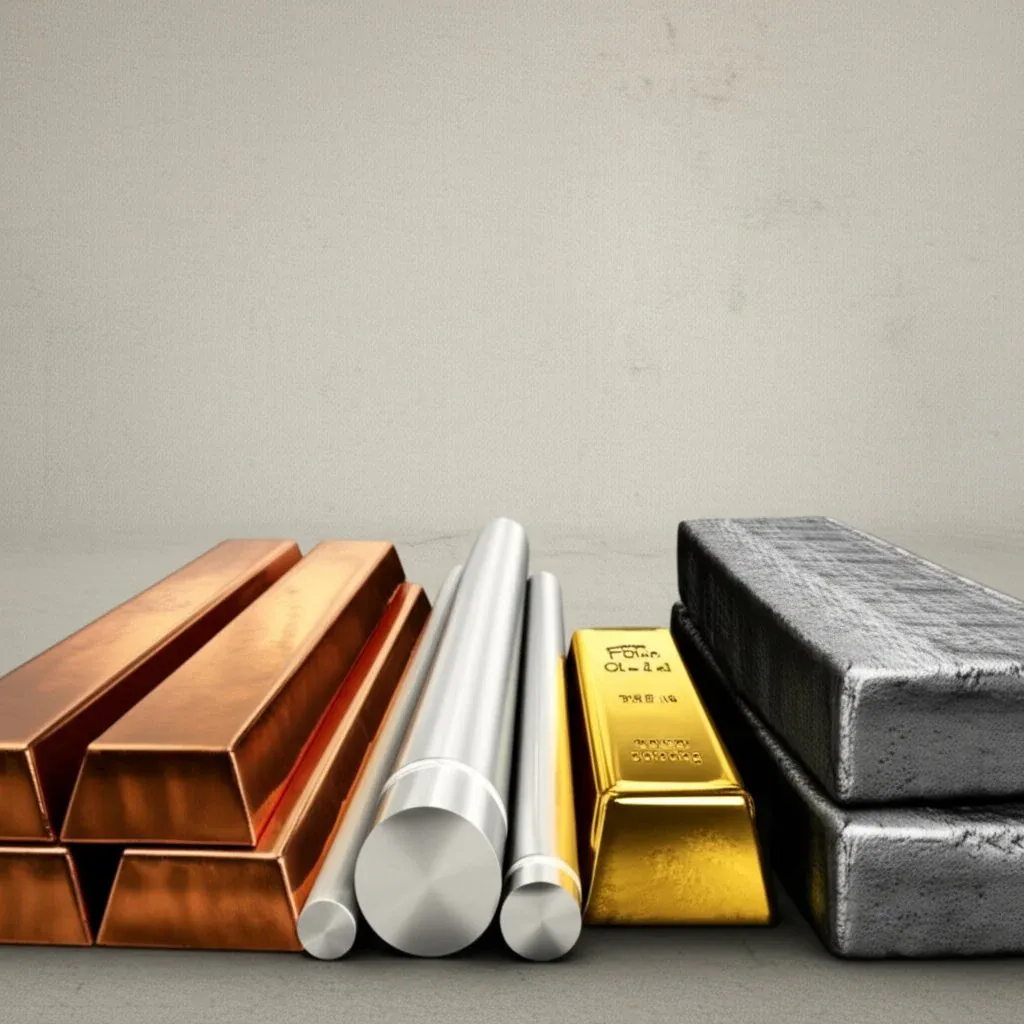
The Reason Manufacturers Are Paying $5,000 Per Ounce For Something You're Charging $50 a Ton to Haul Away
Let me show you something that should change the way you look at your operations. Forever.
Right now, in March 2026, three of the most critical metals in the world are simultaneously in structural deficit.
Not cyclical dips. Not temporary shortages.
Structural deficits. The kind that don't fix themselves.
Gold hit an all-time high of $5,595 per ounce in January 2026. Up 66% in a single year — the best performance since 1979. J.P. Morgan is projecting $5,000 as a floor, with $6,000 possible in the near term.
Silver gained 143% in 2025 — the best run since the Hunt Brothers squeeze in 1979. The global silver market has posted a structural deficit for five consecutive years. Five. In 2025 alone, demand exceeded supply by an estimated 230 million ounces. China just imposed export restrictions on silver, blocking hundreds of smaller exporters overnight.
Copper is entering a structural deficit in 2026 — confirmed by J.P. Morgan, BloombergNEF, and the International Copper Study Group. S&P Global projects a 10-million-metric-ton shortfall by 2040. New mines take 20 to 30 years to permit and build in most developed countries.
Three metals. Three simultaneous structural deficits. One moment in time.
And here's what makes this extraordinary:
All three are already flowing through your operations.
This Is Not a Price Story. It's a Scarcity Story.
Most people look at gold at $5,000+ and think: investment. Safe haven. Speculation.
They're missing the point.
Gold at $5,000 means the people who control physical gold control something the market is desperately short of. Central banks bought over 863 tonnes in 2025 alone. Countries are stockpiling. Governments are treating it as a reserve asset.
And you're recovering it from circuit boards, connectors, and electronic waste — treating it as an afterthought.
Silver is even more telling.
Silver is not just a precious metal. It's the most electrically conductive element on the periodic table. Every solar panel needs it. Every EV charging system needs it. Every AI data center needs it.
And the world cannot produce enough of it.
COMEX inventories in the United States are down nearly 70% since 2020. London vaults have shed roughly 40% of their holdings. At current consumption rates, some industrial regions have less than 45 days of accessible silver reserves.
Less than 45 days.
That's not a shortage. That's a crisis in slow motion.
And copper? S&P Global called it plainly in January 2026:
The copper supply deficit constitutes a "systemic risk for global industries, technological advancement and economic growth."
An EV requires 3 to 4 times more copper than a conventional vehicle. AI data centers are projected to consume an additional 475,000 tonnes of copper in 2026 alone. The Grasberg mine — second largest in the world — is partially shut down. Major mines in Chile and the DRC have suffered disruptions.
Mine supply growth in 2026: estimated at 1.4%.
Demand growth: outpacing it, structurally, for years to come.
Now Ask Yourself This Question
If you're running a waste management operation — HVAC dismantling, e-waste processing, construction scrap, industrial dismantling — where do you think gold, silver, and copper go when products reach end of life?
They come to you.
Or they should.
The tragedy of this moment is not that these metals are scarce.
The tragedy is that we're still burying them.
Every tonne of mixed e-waste that goes to landfill instead of proper recovery is a tonne of gold, silver, and copper that will never reach a manufacturer who desperately needs it.
Every HVAC unit stripped of its copper without proper segregation is margin destroyed.
Every construction demolition processed for disposal rather than material yield is a missed position in the most lucrative commodity market in a generation.
The Math Nobody Is Doing
Here is the calculation that most waste operators never run.
When gold trades at $5,000 per ounce, the gold content in one tonne of high-grade circuit board scrap is worth thousands of dollars.
When silver trades above $80 per ounce — and analysts at BNP Paribas are projecting $100 — the silver in your photovoltaic waste, your electronic scrap, your industrial byproducts is no longer marginal. It's strategic.
When copper enters a structural deficit and J.P. Morgan is projecting prices above $12,000 per metric ton, the copper in your collection stream is not scrap.
It is inventory.
It is the material that a manufacturer is going to pay a premium for because the alternative — waiting for a new mine to come online, navigating export controls, absorbing tariff volatility — is worse.
This is the position secondary raw material operators can own right now.
Not in five years. Not when the market forces the conversation.
Now. While most competitors are still quoting disposal rates.
The Structural Shift That Changes Everything
Let me tell you what's really happening beneath the surface of these numbers.
The world spent decades building supply chains on the assumption that virgin materials would always be available, always be affordable, and always be politically accessible.
That assumption is broken.
China controls the refining of 60–70% of global silver. It just restricted exports. It controls roughly 90% of rare earth production. It has imposed export controls on gallium and germanium. The playbook is clear.
Mining new copper in the United States takes an average of 29 years from discovery to production. Twenty-nine years.
Meanwhile, the urban mine — the metals locked inside existing products, infrastructure, and waste streams — is available today. Without permits. Without geopolitical risk. Without a 29-year development cycle.
When I talk about waste alchemy, this is what I mean.
Not recycling as an environmental obligation.
Recovery as a strategic industrial function.
The operators who understand this distinction are building businesses that will be worth dramatically more in five years than they are today. Not because they got lucky with commodity prices. But because they positioned themselves as domestic resource suppliers at the exact moment when domestic supply became the only reliable supply.
What This Means For Your Business, Right Now
The triple deficit in gold, silver, and copper is not an abstract market story.
It is a direct signal about where value is accumulating in your industry.
Ask yourself these questions honestly:
Are you segregating your e-waste streams to maximize precious metal recovery? Or are you sending mixed loads that dilute the yield?
Are you tracking the copper content in every HVAC unit, every cable, every demolition project? Or are you pricing it as generic scrap?
Are you positioned with buyers who pay for material quality and purity? Or are you selling to whoever offers the fastest pickup?
Are you thinking about your collections as inventory — assets with rising value — or as a cost to be managed?
The answers to those questions determine whether the triple deficit is an opportunity you capture or one you watch someone else capture.
The Window Is Open. It Won't Stay Open Forever.
Every structural deficit eventually triggers a response. More recycling infrastructure. More investment in urban mining. More sophisticated operators entering the space.
That response is coming.
The operators who build their positioning now — who establish the material flows, the buyer relationships, the sorting and segregation processes, and the market intelligence to sell recovered gold, silver, and copper at premium prices — are the ones who will own the margin when the market fully wakes up.
The ones who wait will compete in a crowded space against better-capitalized players who moved earlier.
The triple deficit is real.
The urban mine is sitting in your collections.
The question is whether you're a waste operator or a resource owner.
Those are two very different businesses.
And right now, you still get to choose.
To Your Success
Sam
The Waste Management Alchemist
Sam Barrili is The Waste Management Alchemist and creator of the SAM Method. He has helped dozens of waste management companies across America and Europe unlock millions in additional annual profit by repositioning their operations around secondary raw material recovery.
Want to understand exactly how to apply this to your business? The Waste Alchemy breaks down the full framework — from mindset shift to execution. Get your copy: https://bit.ly/4sQt4LQ

© 2026 Marketing4waste - All Rights Reserved,
Marketing4Waste is a brand of MiM MarketingInterimManagers LLC
+1 801 804 5730