Increase the Revenues of Your Waste Company With the Tips Shared in Our Blog Articles
The Billion-Dollar Blind Spot: How U.S. Waste Companies Are Ignoring Entire Waste Streams Worth Fortunes
Let me start with something uncomfortable.
If you operate a waste management company in the United States today, there is a very high probability that millions of dollars in value are passing through your hands every year… and you’re letting them go.
Not because you’re incompetent.
Not because you’re lazy.
But because the system you were trained in never taught you to see waste as inventory.
This article is not about “sustainability.”
It’s not about politics.
It’s not about saving the planet.
It’s about numbers.
It’s about blind spots.
And it’s about why entire waste streams—measured in millions of tons and billions of dollars—are being ignored by the very companies that already control them.
If you read this carefully, you’ll never look at your dumpsters, routes, contracts, or tipping fees the same way again.
The Core Illusion Holding the Industry Back
The waste industry in the U.S. is still built on a linear mental model:
Collect → haul → dispose → invoice → repeat.
That model worked when:
Raw materials were cheap
Supply chains were stable
Manufacturing was offshore
Nobody cared where inputs came from
That world is gone.
Today, materials matter more than waste services.
And yet most companies are still paid—and think—like logistics providers instead of resource owners.
This creates a paradox:
The companies that physically control the materials
are the ones capturing the least value from them.
That’s the blind spot.
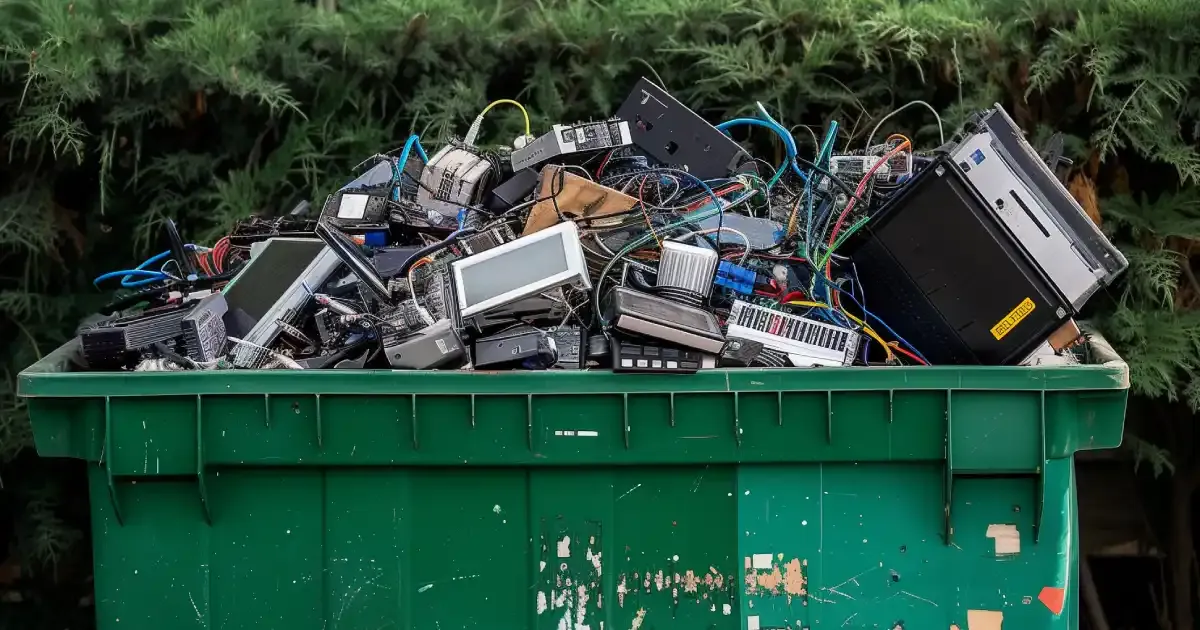
The First Ignored Giant: E-Waste (Billions Lost in Plain Sight)
Let’s talk about e-waste.
In the U.S., we generate over 7 million metric tons of electronic waste every year.
Inside that waste:
Copper
Aluminum
Gold
Silver
Palladium
Rare earth elements
Specialty alloys
Conservatively, the embedded recoverable value exceeds $7 billion per year.
And yet…
Most waste companies treat e-waste as:
“Special waste”
“Too technical”
“Someone else’s problem”
“A compliance headache”
Here’s the truth most people don’t want to face:
You don’t need to refine e-waste to make money on e-waste.
Refining is the last step.
Value is created long before that.
The real opportunity is:
Aggregation
Grading
Pre-sorting
Positioning to the right buyer
Most operators dump e-waste into:
Mixed electronics containers
Low-grade downstream contracts
One-size-fits-all pricing
That’s like selling uncut diamonds by weight to someone who knows exactly what they’re worth.
HVAC & Appliances: Where One Unit Hides Four Revenue Streams
Now let’s move to one of the most misunderstood categories in U.S. waste management: HVAC systems and appliances.
Every year in the U.S.:
Millions of air conditioners
Millions of refrigerators
Millions of dehumidifiers
Hundreds of thousands of tons go straight to landfills.
What’s inside one HVAC unit?
Copper tubing
Aluminum heat exchangers
Steel frames
Compressors
Oils
Refrigerant gases
Electronic boards
And yet most waste companies do this:
“We sell the unit whole as scrap.”
That’s not recycling.
That’s value destruction.
When you sell a unit whole:
You downgrade copper
You lose refrigerant value
You give away aluminum margins
You collapse multiple commodities into one low-price category
Companies that isolate components routinely extract 3 to 5 revenue lines from a single unit.
The difference isn’t technology.
It’s process design.
Plastics: The Most Misunderstood Billion-Dollar Stream
Let’s address plastics, because this is where thinking gets lazy.
The U.S. landfills tens of millions of tons of plastics every year.
Most people stop the analysis there and say:
“Plastics aren’t worth much.”
That’s false.
Municipal mixed plastics aren’t worth much.
Industrial plastics are a different universe.
Ignored streams include:
HDPE crates
PP production scrap
LDPE stretch film
Injection molding rejects
Warehouse packaging
These materials are:
Clean
Single-polymer
Consistent
Buyer-ready
And yet they are often:
Thrown in general waste
Baled incorrectly
Sold under the wrong grade
Not sold at all
Even if only 10% of landfilled plastics were captured as clean industrial streams, the market value would reach hundreds of millions—if not billions—per year.
The problem isn’t plastic.
The problem is classification ignorance.
The “Small Stuff” That Quietly Bleeds Profit
Now let’s talk about the material nobody tracks—and therefore nobody respects.
I call them micro-materials:
Brass valves
Bronze fittings
Copper alloys
Small motors
Short wire cuts
Stainless fixtures
Individually?
They look insignificant.
Aggregated across:
Construction sites
Demolition projects
Fire protection systems
Mechanical upgrades
They become serious money.
Most of these materials are:
Downgraded into mixed metal
Sold as steel
Thrown away
Ignored by crews under time pressure
This isn’t a market failure.
It’s a training failure.
Companies lose margin not because prices are low—but because their teams don’t know what they’re holding.
Data Centers: Urban Mines with Contracts Attached
One of the fastest-growing ignored niches is data center decommissioning.
Inside a single data center:
Copper busbars
Aluminum racks
Power supplies
Server internals
High-grade electronics
Yet most waste companies don’t touch it because:
They fear NDAs
They don’t understand chain-of-custody
They assume “IT recyclers handle that”
Wrong.
Data centers are not waste.
They are scheduled urban mines.
The companies that learn to:
Handle security protocols
Dismantle selectively
Aggregate materials correctly
Create recurring, high-margin streams with predictable volumes.
The Pattern You Should Notice (This Is Important)
Every ignored waste stream shares the same DNA:
They are not plug-and-play
They require thinking, not machines
They sit between waste and commodity
They punish lazy systems
They reward structured operators
That’s why:
Large corporations ignore them (too operationally granular)
Small companies ignore them (no strategic framework)
And that’s exactly why the opportunity exists.
The Economic Impact: Why This Changes Everything
Let’s step back.
We’re not talking about adding:
3% more efficiency
A marginal recycling program
A green checkbox
We’re talking about:
New revenue lines
Higher EBITDA per ton
Lower dependency on tipping fees
Reduced exposure to landfill margins
Real asset-based growth
For many companies, focusing on ignored waste streams can:
Add 6 to 7 figures in annual revenue
Without buying land
Without building plants
Without massive capex
This is not about becoming a recycler.
It’s about becoming a strategist of materials.
The Real Question (Don’t Skip This)
Here’s the question that separates operators from leaders:
Which materials are already passing through my company every week that I am currently treating as a cost instead of inventory?
Not someday.
Not hypothetically.
Right now.
That’s where the leverage is.
Why Most Companies Never Fix This (And Why You Can)
Most companies don’t fix this because:
They’re overwhelmed operationally
They chase volume instead of margin
They lack a framework to prioritize streams
They don’t know how to talk to buyers
That’s not a moral failure.
It’s an information gap.
And information gaps are profitable—if you close them.
Final Thought from the Alchemist
Waste is not the problem.
Blindness is.
The materials are there.
The volumes are there.
The buyers are there.
The money is there.
The only missing piece is a shift in perspective.
And once that shift happens, the same dumpsters, routes, and contracts you already have start behaving very differently.
👉 Ready to See What You’re Leaving on the Table?
If you want to:
Identify the ignored waste streams already in your operation
Quantify their real market value
Build a high-return, low-capex strategy around them
Then let’s talk.
📅 Book your free 20-minute strategy call here:
👉 https://sambarrili.com/schedule-free-20min-call
No fluff.
No theory.
Just clarity.
Because the biggest risk in this industry right now isn’t regulation or competition.
It’s not knowing what you’re throwing away.
To your success,
Sam Barrili
The Waste Management Alchemist

© 2026 Marketing4waste - All Rights Reserved,
Marketing4Waste is a brand of MiM MarketingInterimManagers LLC
+1 801 804 5730